
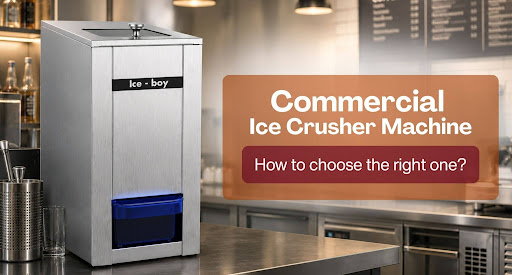
- A commercial ice crusher machine is equipment that mechanically breaks solid ice cubes or blocks into smaller crushed, flaked, or snow-like.
- Crushed ice isn’t a garnish decision, it’s a functional one across a wider range of businesses than most people assume.
- Mojitos, juleps, and frozen cocktails need fine, fast-melting crushed ice that chills a drink quickly without watering it down before.
- Blended drinks rely on consistently sized crushed ice for a smooth texture, batch after batch, during peak morning and afternoon rushes.
- Buffet displays, ice sculptures, and banquet beverage service all draw on crushed ice at volumes a countertop unit can’t sustain.
Nobody budgets for a commercial ice crusher machine the way they budget for a coffee machine or a POS system. It sits in the corner, does its job quietly, and gets forgotten, until it seizes up mid-shift on a Friday night and your entire cocktail and smoothie menu grinds to a halt.
That’s usually not bad luck. It’s a machine bought for light or residential use being asked to do commercial-grade work every single day. This guide covers what actually separates a crusher built for continuous bar or kitchen use from one that isn’t, what capacity you need, and which ice type pairs with which crushing setup.
What Is a Commercial Ice Crusher Machine?
A commercial ice crusher machine is equipment that mechanically breaks solid ice cubes or blocks into smaller crushed, flaked, or snow-like pieces, built for repeated, high-volume use in a food service or healthcare setting. It doesn’t freeze water itself; it processes ice that’s already been made.
That’s the key distinction buyers miss: a crusher is not an ice maker. An ice maker produces cubes, bullets, or blocks from filtered water on a freeze cycle. A crusher takes that finished ice and reduces it to the texture your drink or dish actually needs. Most commercial kitchens run both, an ice maker feeding a crusher, rather than expecting one machine to do both jobs.
Domestic crushers, the kind sold for home bars, are built for occasional use, light plastic housings, and small batches. Commercial units are built around continuous-duty motors, stainless steel construction, and safety interlocks designed to survive dozens of crush cycles a day without overheating or dulling.
Why Businesses Use Commercial Ice Crushers
Crushed ice isn’t a garnish decision, it’s a functional one across a wider range of businesses than most people assume.
Bars & Cocktail Lounges
Mojitos, juleps, and frozen cocktails need fine, fast-melting crushed ice that chills a drink quickly without watering it down before service.
Cafés & Smoothie Shops
Blended drinks rely on consistently sized crushed ice for a smooth texture, batch after batch, during peak morning and afternoon rushes.
Hotels & Catering
Buffet displays, ice sculptures, and banquet beverage service all draw on crushed ice at volumes a countertop unit can’t sustain.
Hospitals & Healthcare
Crushed ice supports cold therapy packs, patient hydration, and specimen or medication cold-chain handling, where consistent, hygienic output matters more than speed.
Seafood & Food Display
Fish counters and food display cases use crushed ice to keep perishables visibly fresh and at safe temperature without direct contact damage.
Internal link: Ice Cube Production Machine Buying Guide → iceboyindia.com/ice-cube-production-machine
Types of Commercial Ice Crusher Machines
Electric Ice Crushers
Electric crushers are the commercial default. A motor drives a blade or gear assembly that crushes ice in seconds rather than minutes, and they hold up to high-volume, repeated use across a full shift. Ice-boy’s electric range runs on 300W to 750W motors depending on capacity, with stainless steel double-layer construction throughout.
Manual Ice Crushers
Hand-cranked units with no motor, suited to small-scale or backup use, home bars, or very low-volume juice counters where an electric unit isn’t worth the investment. They’re inexpensive but slow, and not built for continuous commercial service.
Industrial Ice Crushers
Industrial crushers handle large operations, catering companies, packaged ice suppliers, and high-volume hotel banquet kitchens, where output needs to sustain well above 100 kg/hr without a cooldown break between batches.
What to Look for in a Commercial Ice Crusher Machine
Crushing capacity: Match the machine’s rated kg/hr output to your busiest hour, not your average hour.
Speed & efficiency: A commercial unit should crush a full load in seconds, not minutes, to keep up during peak service.
Build quality: Look for stainless steel housing and welded (not riveted) blades. Ice-boy’s commercial crushers use 2.5mm blades welded onto an 18mm rod specifically to resist the metal fatigue that comes from daily commercial use.
Ease of cleaning: A removable ice chamber and blade assembly cuts daily cleaning time and keeps output hygienic.
Noise levels: Front-of-house units in bars and cafés need a quieter motor than a back-of-house catering machine, where noise matters less.
Safety features: Auto-stop timers and lid-interlock switches prevent operation with the chamber open, a real injury risk with high-speed blades.
Reference spec block (Ice-boy C-103): 2.0 kg/min crushing rate · 2.5mm blade thickness · 18mm blade rod · Lifelong blade warranty
Ice Crusher Capacity Guide
Unlike ice makers, which are rated by kg/day of continuous production, crushers are rated by kg/hr crushing rate, since they process already-made ice in short bursts rather than running around the clock.
| Crushing Rate | Best For |
| Up to 15 kg/hr | Manual crushers, home bars, backup use |
| 30–60 kg/hr | Cafés, juice counters, small bars |
| 60–120 kg/hr | High-volume bars, restaurants, hotels |
| 150+ kg/hr | Catering, packaged ice, industrial use |
Note: Size for your busiest 30-minute window, not your average hour. A machine that’s adequate at 3pm can still fall behind during a Friday rush.
Ice Crusher Machine Price in India
Price scales with motor power, blade construction, and duty cycle rather than brand alone.
| Machine Type | Estimated Price |
| Small commercial crushers | ₹5,000 – ₹20,000 |
| Mid-range electric crushers | ₹20,000 – ₹60,000 |
| Industrial crushers | ₹60,000+ |
Note: These are entry-point ranges by category. Full cost breakdown by motor size and blade type lives in the existing Ice Crusher Machine Price in India guide — this article links out to it rather than duplicating it, to avoid both pages competing for the same search query.
Best Ice Types for Crushing
The ice you feed into a crusher affects the texture that comes out, and denser ice generally crushes cleaner than lighter, air-filled ice.
Bullet ice: Its hollow center crushes easily and evenly, making it a popular feed choice for bars running high volumes of crushed-ice cocktails.
Cube ice (dice): Denser and slower to melt, cube ice takes slightly more crushing force but produces a cleaner, more uniform crush.
Gourmet ice: The densest of the three, gourmet ice crushes into larger, slower-melting fragments, better suited to premium drinks where dilution needs to stay minimal even after crushing.
As a rule, denser ice holds its structure better under the blade and produces a more consistent crush, while lighter, more porous ice tends to shatter unevenly into a mix of coarse chunks and fine powder.
Common Mistakes Buyers Make
Buying low-capacity machines: A crusher sized for average demand falls behind the moment a rush hits, forcing staff to run it back-to-back and shortening its lifespan.
Ignoring maintenance needs: Blades dull and motors strain faster without regular cleaning, and by the time output visibly drops, some wear is already done.
Choosing residential crushers for commercial use: A home-grade unit run at commercial volumes typically fails within months, not years, and voids most warranties in the process.
Maintenance Tips for Ice Crushers
Cleaning blades regularly: Rinse and sanitize the blade assembly daily to prevent mineral buildup and bacterial contamination on food-contact surfaces.
Preventing rust & scaling: Wipe down housing after each shift and keep the unit dry between uses, even with stainless steel construction, standing water accelerates wear on seals and bearings.
Safe operation practices: Never bypass the lid interlock or auto-stop feature, and keep the machine unplugged during any manual cleaning or blade inspection.
Commercial Ice Crusher vs Ice Slicer
The two are often confused, but they produce meaningfully different textures. A crusher breaks ice into coarse, irregular fragments, the standard texture for mojitos, juleps, and most crushed-ice cocktails, where some crunch and quick chill matter more than a uniform look.
An ice slicer shaves ice into a fine, snow-like consistency, the texture used for shaved-ice desserts and delicate presentation where appearance and mouthfeel are the priority over crushing speed. Bars serving both cocktails and dessert-style drinks sometimes run a slicer and a crusher side by side rather than expecting one machine to cover both jobs. Ice-boy’s crusher and slicer range covers both formats under one product line.
Final Thoughts
The right ice crusher doesn’t announce itself. It just keeps up, shift after shift, without becoming the thing a bartender has to work around during a Saturday rush. Choosing the right one is less about finding the cheapest option and more about matching crushing capacity, build quality, and duty cycle to how hard your business actually runs the machine. Commercial durability pays for itself the first time a cheaper unit would have failed.
Ice-boy has built its crusher and slicer range on the same standard as its ice makers: stainless steel construction, welded blades, and over 33 years of real-world use across cafés, bars, restaurants, and hotels in India. If you’re weighing crusher types or capacity for your own operation, our team can help you land on the right fit before your next busy weekend, not after.
People Also Ask (FAQ)
What is a commercial ice crusher machine used for?
It’s used to break solid ice cubes or blocks into smaller crushed or fine ice for cocktails, smoothies, cold beverage displays, seafood presentation, and hospital cold-therapy applications, on demand and at commercial volumes.
What is the difference between an ice crusher and an ice maker?
An ice maker freezes water into cubes or shapes from scratch. An ice crusher doesn’t make ice at all, it takes existing cubes and breaks them into smaller crushed or flaked pieces. Most commercial kitchens use both together.
Which is better, an ice crusher or an ice slicer?
An ice crusher produces coarser, irregular fragments suited to cocktails and smoothies. An ice slicer produces fine, snow-like ice used for shaved-ice desserts and delicate presentation. The right choice depends on the texture your menu needs.
Can commercial ice crushers handle cube ice and block ice?
Most commercial electric crushers handle standard cube, dice, and bullet ice well. Larger block ice usually needs an industrial-grade crusher with a wider feed opening and a higher-torque motor to avoid jamming.
How do I choose the right commercial ice crusher machine?
Match crushing capacity (kg/hr) to your peak-hour demand, confirm stainless steel construction and blade thickness, check noise levels for front-of-house use, and prioritize a machine with auto-stop safety and an accessible service network.