
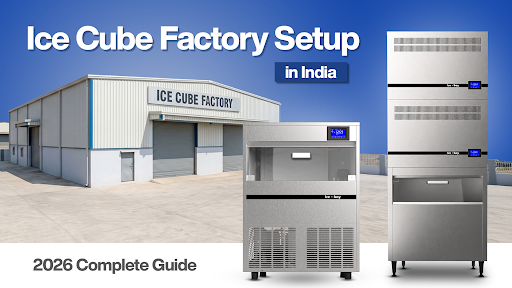
- The commercial ice industry in India has expanded rapidly over the last few years due to changing consumption habits and the growth of the.
- India’s café and quick-service restaurant market has seen significant expansion across metro cities as well as tier-2 and tier-3 markets.
- Packaged ice has evolved into a proper commercial category.
- The wedding, event, and catering industry uses large volumes of ice every day.
- Before investing in machinery, entrepreneurs should decide what type of ice business they want to build.
The demand for commercial ice in India has grown far beyond restaurants and bars. Today, ice is a critical supply product across cafés, hotels, cloud kitchens, beverage brands, catering companies, healthcare facilities, and industrial cooling operations. As consumption increases, many entrepreneurs are exploring the opportunity of starting an ice cube manufacturing business or building a commercial ice production setup.
If you are researching an ice cube factory setup, understanding the business goes beyond simply purchasing a machine. Success depends on choosing the right production capacity, ensuring water quality, planning storage and packaging correctly, and investing in reliable equipment that can operate continuously.
This guide explains how to start an ice cube business in India, what machinery is required, estimated setup costs, operational considerations, and how to choose the right commercial ice machines for long-term profitability.
Why the Ice Cube Business Is Growing in India
The commercial ice industry in India has expanded rapidly over the last few years due to changing consumption habits and the growth of the food and beverage ecosystem.
Growth of Cafés, Bars, and QSRs
India’s café and quick-service restaurant market has seen significant expansion across metro cities as well as tier-2 and tier-3 markets. Cold beverages, mocktails, iced coffees, and cocktail culture have increased the daily demand for hygienic, high-quality ice.
Most cafés and bars today prefer purchasing ready-made commercial ice rather than producing small quantities in-house, creating a steady opportunity for packaged and commercial ice suppliers.
Rising Demand for Packaged Ice
Packaged ice has evolved into a proper commercial category. Today, packaged ice is used in:
- House parties and events
- Catering operations
- Beverage counters
- Retail convenience stores
- Outdoor events and concerts
Consumers increasingly expect clean, food-grade ice instead of locally sourced block ice or unhygienic alternatives.
Expansion of the Events and Catering Industry
The wedding, event, and catering industry uses large volumes of ice every day. Banquet halls, outdoor events, and beverage stations require continuous supply, especially during summer months.
This creates recurring demand for businesses operating a reliable ice cube manufacturing business.
Healthcare and Industrial Demand
Ice is also widely used in:
- Hospitals and laboratories
- Food processing units
- Pharmaceutical logistics
- Seafood and cold chain operations
Industrial and medical sectors require consistent and hygienic ice production, opening opportunities beyond hospitality.
Types of Ice Cube Businesses
Before investing in machinery, entrepreneurs should decide what type of ice business they want to build.
Packaged Drinking Ice Business
This is one of the fastest-growing segments in India. The business focuses on:
- Producing hygienic food-grade ice
- Packaging it in branded bags
- Supplying to retail stores, cafés, bars, and events
Key requirements include:
- High water quality
- Attractive packaging
- Reliable cold storage
This model works well in urban markets with strong hospitality demand.
Commercial Ice Supply
Commercial suppliers focus on supplying ice directly to:
- Restaurants
- Bars
- Hotels
- Cloud kitchens
- Beverage chains
Unlike retail packaged ice, this model often involves bulk supply contracts and recurring deliveries.
Industrial Cooling Ice
Industrial ice businesses serve:
- Seafood transport
- Food preservation
- Pharmaceutical logistics
- Industrial cooling applications
These setups require larger production capacities and higher operational scale.
Hospitality Ice Production
Some businesses install large-capacity machines specifically to support their own hospitality operations.
Hotels, resorts, and large catering groups often invest in dedicated commercial ice systems to reduce dependency on external suppliers.
Machines Required for an Ice Cube Factory
A successful commercial ice production setup requires more than just an ice-making machine.
Ice Cube Machines
The ice machine is the core of the operation. Commercial and industrial ice machines are designed to:
- Produce consistent ice continuously
- Maintain crystal-clear ice quality
- Handle large production volumes
Ice-boy machines support capacities ranging from smaller commercial setups to industrial-scale production exceeding 800 kg/day. Modern machines also include:
- Patented freezing technology
- Energy-efficient systems
- Easy-clean designs
- Durable commercial-grade construction
Water Filtration Systems
Water quality directly determines ice quality. Without proper filtration:
- Ice appears cloudy
- Impurities affect taste
- Machines develop scaling faster
A proper setup usually includes:
- RO systems
- Sediment filtration
- Carbon filtration
- Water softening systems
For packaged drinking ice businesses, water quality is one of the most important factors affecting customer trust.
Ice Crushers
Many businesses require crushed ice in addition to cubes. Ice crushers are used for:
- Cocktail bars
- Seafood applications
- Ice packing
- Industrial cooling
Adding crushers expands the range of customers a factory can serve.
Cold Storage and Freezers
Storage planning is often underestimated in ice businesses. Ice production and ice dispatch rarely happen at the same speed. Without proper cold storage:
- Ice melts during peak production
- Inventory management becomes difficult
- Delivery flexibility decreases
Cold storage systems allow factories to:
- Store excess production
- Handle seasonal demand spikes
- Improve delivery scheduling
Packaging Equipment
For packaged ice businesses, packaging directly affects product perception. Packaging equipment includes:
- Bag sealing machines
- Weighing systems
- Labeling systems
Proper packaging improves hygiene, branding, and shelf presentation.
Ice Cube Factory Setup Cost in India
The ice cube plant setup cost depends heavily on scale, production capacity, and automation level.
| Setup Size | Estimated Investment |
| Small setup | ₹2L – ₹5L |
| Medium commercial setup | ₹5L – ₹20L |
| Large industrial setup | ₹20L+ |
What Does This Cost Include?
Machine Cost
The ice machine itself forms the largest portion of the investment. Larger capacities and advanced freezing systems increase cost.
Installation and Electrical Setup
Commercial ice machines require:
- Stable electrical systems
- Drainage planning
- Proper ventilation
Industrial setups may require dedicated electrical infrastructure.
Water Treatment Systems
Clean water is essential for both machine performance and ice quality. Water treatment costs often include:
- RO systems
- Softening units
- Filtration systems
Storage and Freezing Infrastructure
Cold rooms and storage freezers significantly impact setup cost but are essential for efficient operations.
How Much Space Is Required for an Ice Cube Factory?
Space requirements depend on production scale.
Small Factory Setup
A small packaged ice business can operate within: 300–500 sq ft
This includes:
- Ice machine
- Basic storage
- Packaging area
Medium Commercial Setup
A medium commercial operation typically requires: 1000+ sq ft
This allows:
- Multiple machines
- Storage freezers
- Packaging workflow
- Delivery handling space
Industrial Setup
Industrial-scale operations often require warehouse-style facilities with:
- Large cold rooms
- Logistics access
- Dedicated loading zones
Water Quality Requirements for Ice Production
Water quality is one of the most important aspects of commercial ice production.
Why Water Quality Matters
Poor water quality affects:
- Ice clarity
- Taste
- Hygiene
- Machine lifespan
Customers increasingly expect clean, transparent, food-grade ice.
TDS and Filtration Considerations
High TDS levels can lead to:
- Cloudy ice
- Scaling inside machines
- Poor freezing performance
Proper filtration improves:
- Ice appearance
- Machine efficiency
- Product quality consistency
Hygiene and Food-Grade Standards
For packaged drinking ice, maintaining hygienic production standards is essential.
This includes:
- Clean water supply
- Sanitized storage
- Proper packaging processes
Choosing the Right Ice Machine Capacity
Capacity planning should be based on realistic demand forecasts.
| Daily Demand | Recommended Machine |
| Small café supply | 50–100 kg/day |
| Commercial supply | 200–500 kg/day |
| Industrial supply | 800+ kg/day |
Why Correct Capacity Matters
Undersized machines create:
- Delivery delays
- Inconsistent supply
- Lost business opportunities
Oversized setups increase:
- Electricity costs
- Idle production capacity
The right balance ensures efficient operations and profitability.
Best Ice Types for Commercial Supply
Different businesses require different ice types.
Bullet Ice
Best for:
- Cafés
- Beverage counters
- Quick-service operations
Benefits:
- Fast cooling
- Easy handling
- High-speed production
Gourmet Ice
Best for:
- Premium bars
- Luxury hotels
- Cocktail programs
Benefits:
- Slower dilution
- Better presentation
- Crystal-clear appearance
Dice Ice
Best for:
- Packaged ice businesses
- Restaurants
- Banquet operations
Benefits:
- Uniform shape
- Easy storage
- Versatile usage
Power Consumption and Operational Costs
Operational cost planning is critical in the ice business.
Electricity Consumption
Commercial ice machines operate continuously, making electricity a major expense. Power usage depends on:
- Machine capacity
- Cooling efficiency
- Ambient temperature
Energy-efficient systems reduce long-term operating costs significantly.
Water Consumption
Ice production naturally consumes large volumes of water. Efficient machines minimize:
- Water wastage
- Rejected water during filtration
Maintenance Costs
Regular maintenance includes:
- Cleaning
- Water filter replacement
- Component servicing
Machines with easy-clean systems reduce maintenance effort and downtime.
Licenses Required for Ice Cube Manufacturing in India
Depending on business type and scale, common requirements may include:
- FSSAI registration
- Local trade license
- GST registration
- Pollution compliance where applicable
Businesses should consult local authorities or legal professionals for updated compliance requirements.
Common Mistakes in Ice Factory Setup
One of the biggest reasons ice businesses struggle in their first few years is not lack of demand. It is poor planning during the setup stage.
Many entrepreneurs assume that starting an ice cube manufacturing business is straightforward because the product itself seems simple. In reality, commercial ice production involves operational planning, temperature management, water treatment, logistics, hygiene control, and machine reliability.
Small mistakes in the beginning often lead to:
- High operational costs
- Product inconsistency
- Frequent machine downtime
- Customer complaints
- Low profitability
Understanding these mistakes early can help businesses build a far more stable and scalable operation.
Underestimating Cold Storage Requirements
This is one of the most common and expensive mistakes new businesses make. Most first-time operators focus entirely on ice production capacity and forget that producing ice and storing ice are two completely different challenges.
For example:
- A machine may produce 300 kg of ice per day
- But dispatch may happen only twice daily
- During summer, delivery schedules may get delayed
- Peak demand periods may require inventory holding
Without proper cold storage:
- Ice begins melting during holding periods
- Packaging weakens due to moisture exposure
- Product quality becomes inconsistent
- Electricity consumption increases because machines work harder to compensate for losses
Many businesses initially try to manage with domestic freezers or temporary storage solutions. This usually becomes unsustainable very quickly.
A properly planned ice factory should always include:
- Dedicated cold storage space
- Proper insulation
- Organized inventory movement
- Storage planning based on peak demand, not average demand
Storage is not an “extra cost.” It is a core operational requirement in any serious packaged ice business.
Poor Water Filtration Planning
Water quality directly defines ice quality. Yet many operators treat filtration as a secondary setup expense instead of a core production requirement.
Poor filtration creates multiple problems simultaneously:
- Cloudy or white ice appearance
- Bad taste or odor in packaged ice
- Faster machine scaling and damage
- Reduced freezing efficiency
- Hygiene concerns for commercial customers
For packaged drinking ice businesses, poor water quality damages trust almost immediately. Hotels, cafés, and bars increasingly expect crystal-clear, food-grade ice.
Businesses also often underestimate regional water challenges such as:
- High TDS levels
- Hard water
- Sediment contamination
- Mineral-heavy supply
Without proper treatment systems, even premium machines cannot deliver consistent results. A proper commercial ice setup should include:
- RO filtration systems
- Water softening units
- Sediment filters
- Carbon filtration systems
- Regular water quality monitoring
In many cases, investing slightly more in water treatment reduces long-term maintenance costs significantly because machines remain cleaner and operate more efficiently.
Choosing the Wrong Machine Capacity
Capacity planning mistakes hurt profitability from both directions. Some businesses buy machines that are too small to reduce initial investment. Others overspend on oversized industrial setups before building actual demand.
Problems With Undersized Machines
When machines cannot keep up with demand:
- Delivery schedules get delayed
- Customers experience inconsistent supply
- Machines operate continuously under stress
- Maintenance frequency increases
This becomes especially problematic during:
- Summer seasons
- Event-heavy periods
- Wedding and catering demand spikes
Businesses then end up outsourcing ice from competitors just to fulfill orders, reducing margins heavily.
Problems With Oversized Machines
On the other hand, buying very large machines too early creates different issues:
- High electricity costs
- Idle production capacity
- Higher maintenance expenses
- Longer ROI cycles
A successful setup balances:
- Current demand
- Expected growth
- Seasonal fluctuations
- Distribution capability
The goal is not to buy the biggest machine. It is to build a production system that can scale sustainably.
Ignoring Distribution and Logistics Planning
Many entrepreneurs focus heavily on production and forget that ice is a time-sensitive product.
Unlike dry goods, ice requires:
- Fast movement
- Temperature-controlled handling
- Efficient routing
Poor logistics planning leads to:
- Melt loss during transport
- Delayed deliveries
- Damaged packaging
- Product wastage
For commercial clients such as cafés, bars, and restaurants, late delivery directly affects operations. A good ice factory setup should plan:
- Delivery routes
- Insulated transport systems
- Dispatch timing
- Peak-hour delivery management
As businesses grow, logistics efficiency often becomes more important than production itself.
Choosing Machines Based Only on Price
This is one of the most damaging long-term mistakes. Many new operators compare machines purely on initial cost without evaluating:
- Energy efficiency
- Maintenance requirements
- Ice quality consistency
- Machine durability
- Service support availability
A cheaper machine may initially reduce investment, but over time it often creates:
- Higher electricity bills
- Frequent servicing costs
- Inconsistent ice output
- Production downtime
In commercial ice production, downtime directly affects revenue because customers depend on continuous supply. Reliable machines with industrial-grade durability usually provide far better long-term profitability, even if the upfront investment is slightly higher.
Ignoring Preventive Maintenance
Commercial ice machines operate continuously, especially during summer. Without proper maintenance planning:
- Scaling builds inside systems
- Ice clarity decreases
- Production efficiency drops
- Machine breakdown risk increases
Many businesses only service machines after performance issues begin, which often leads to larger repair costs. Preventive maintenance schedules should include:
- Water filter replacement
- Cleaning cycles
- Condenser inspection
- Descaling processes
- Performance monitoring
Regular maintenance not only extends machine lifespan but also maintains consistent ice quality.
Overlooking Hygiene and Food-Grade Standards
As packaged ice demand grows, commercial buyers are becoming far more conscious about hygiene. Poor hygiene practices can damage brand reputation quickly.
Common issues include:
- Improper handling during packaging
- Dirty storage environments
- Cross-contamination risks
- Inadequate cleaning procedures
For businesses supplying:
- Hotels
- Restaurants
- Hospitals
- Retail packaged ice
maintaining food-grade standards is critical. Clean production systems, easy-clean machines, proper staff training, and hygienic packaging processes all contribute to long-term customer trust.
Failing to Plan for Seasonal Demand Spikes
Ice demand in India is highly seasonal. Summer months can increase demand dramatically, especially for:
- Beverage businesses
- Outdoor events
- Catering companies
- Hospitality clients
Many businesses size operations only for average yearly demand and struggle during peak periods. Factories should plan for:
- Seasonal inventory increases
- Additional storage
- Higher production schedules
- Temporary distribution expansion
Businesses that prepare properly for seasonal spikes often generate a significant portion of their annual revenue during peak summer months.
Not Thinking Beyond Production
The most successful ice businesses do not operate like machine owners. They operate like supply chain businesses. Long-term success depends on:
- Reliable delivery
- Consistent quality
- Operational efficiency
- Strong client relationships
- Scalability planning
Machines are only one part of the business. The overall system determines profitability.
Is an Ice Cube Business Profitable in India?
The ice business has strong growth potential due to:
- Rising hospitality demand
- Recurring commercial clients
- Growth in packaged ice consumption
- Seasonal demand spikes
Businesses with:
- Reliable supply
- Hygienic production
- Strong distribution
often build long-term recurring revenue streams.
Final Thoughts
Starting an ice cube manufacturing business is not just about producing ice. It is about building a reliable supply operation that combines hygiene, consistency, storage planning, and efficient logistics. The quality of your machinery directly affects:
- Production reliability
- Operational costs
- Ice clarity and quality
- Long-term profitability
For entrepreneurs entering the packaged ice business in India, investing in durable, energy-efficient commercial machines creates a stronger foundation for growth.
With scalable capacities, patented freezing technologies, and industrial-grade reliability, Ice-boy supports businesses ranging from small commercial setups to large-scale industrial ice production operations.
FAQs – Ice Cube Factory Setup in India
How much does it cost to start an ice cube factory in India?
The setup cost depends on production scale, machine capacity, storage infrastructure, and packaging systems. Small setups may start with a few lakhs, while industrial factories require significantly larger investment.
Is the ice cube business profitable in India?
Yes, the ice cube business is growing due to rising demand from cafés, restaurants, hotels, catering companies, and packaged ice markets across India.
Which machine is used for ice cube production?
Commercial ice cube production uses industrial-grade ice cube machines designed for continuous operation and consistent ice quality.
How much electricity does an ice cube machine consume?
Electricity consumption depends on machine capacity, production volume, and cooling technology. Energy-efficient systems help reduce long-term operating costs.
What type of ice is best for packaged ice businesses?
Dice ice and clear gourmet-style ice are commonly preferred for packaged ice businesses because they offer better appearance, durability, and slower melting during storage and transport.