
- Many buyers believe bullet ice is a “lower quality” alternative to cube ice. This assumption often comes from experience with poorly made bullet ice that melts …
- Understanding poor bullet ice quality makes it easier to identify better machines.
- To understand why bullet ice melts fast in some machines, you need to look inside the freezing process.
- High-quality bullet ice behaves very differently, even though the shape appears similar.
- Evaporator design is one of the most overlooked factors in bullet ice machine quality.
When buyers search for bullet ice machine quality, many assume that all bullet ice is fundamentally the same. After all, it looks similar across machines and brands. The truth is very different.
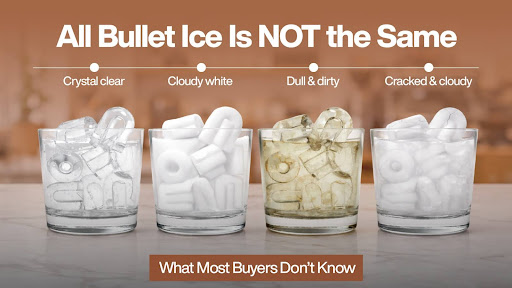
In commercial environments like cafés, bars, hotels, and quick-service outlets, the quality of bullet ice can vary dramatically. Two machines may both produce bullet-shaped ice, yet one delivers clear, slow-melting ice that preserves drink quality, while the other produces hollow, cloudy ice that melts fast and dilutes beverages within minutes.
This difference is not cosmetic. It comes down to engineering, freezing method, and evaporator design.
In this guide, we break down what most buyers do not know about bullet ice, why some bullet ice melts faster than others, and how to identify truly high-quality bullet ice for commercial use.
The Common Assumption: Bullet Ice Is Just Bullet Ice
Many buyers believe bullet ice is a “lower quality” alternative to cube ice. This assumption often comes from experience with poorly made bullet ice that melts too quickly or looks cloudy.
In reality, bullet ice itself is not the problem. The quality of bullet ice depends entirely on how it is made.
Low-cost machines focus on producing ice quickly, not correctly. They prioritize output numbers over freezing consistency. As a result, buyers associate bullet ice with fast melting and poor performance.
High-quality bullet ice, however, behaves very differently. When engineered properly, it can be dense, clear, slow melting, and highly effective for commercial beverage service.
What Low-Quality Bullet Ice Looks Like
Understanding poor bullet ice quality makes it easier to identify better machines.
Hollow Center: Many cheap bullet ice machines produce ice with a visible hollow core. This hollow structure traps air, reduces density, and weakens the ice internally.
Cloudy Appearance: Cloudiness indicates trapped air bubbles and impurities. This usually happens when water freezes unevenly or too quickly.
Fast Melting: Because of low density and internal air pockets, hollow bullet ice melts much faster than dense ice.
High Drink Dilution: Fast melting ice releases water rapidly into beverages, leading to diluted flavors and inconsistent taste.
These characteristics are not inherent to bullet ice as a shape. They are symptoms of poor freezing design.
Why Cheap Bullet Ice Melts Faster
To understand why bullet ice melts fast in some machines, you need to look inside the freezing process.
Air Bubbles Trapped During Freezing
Low-quality machines freeze water from multiple directions at once. This traps air bubbles inside the ice structure instead of pushing them out.
Air pockets increase surface area and reduce thermal mass, causing ice to melt faster.
Uneven Freezing Process
When freezing happens too quickly or inconsistently, the outer layer of ice hardens while the inside remains weak. This creates structural imbalance.
Poor Evaporator Design
Basic evaporator systems rely on simple molds or paddles that do not control freezing direction or water circulation. This leads to hollow formation and inconsistent density.
The result is bullet ice that looks acceptable at first glance but performs poorly in real beverage use.
What Defines High-Quality Bullet Ice
High-quality bullet ice behaves very differently, even though the shape appears similar.
Better Clarity: Clear bullet ice indicates that impurities and air have been pushed out during freezing. This requires controlled, directional freezing.
Higher Density: Dense ice contains less trapped air and more solid structure. Dense ice melts slower and chills drinks more effectively.
Slower Melt Rate: High-density bullet ice maintains its shape longer in beverages, reducing dilution.
Neutral Taste Impact: Proper freezing prevents mineral concentration and air entrapment that can alter taste. This is critical for coffee, mocktails, and premium beverages.
These qualities are achieved through engineering choices, not cosmetic design.
How Evaporator Design Changes Bullet Ice Quality
Evaporator design is one of the most overlooked factors in bullet ice machine quality.
Basic Freezing Systems
Many low-cost machines use simple horizontal molds or paddle-based systems. These systems freeze water unevenly and rely on mechanical movement to release ice.
This approach increases wear, reduces consistency, and leads to hollow ice formation.
Vertical Evaporator Systems
Advanced bullet ice machines use vertical evaporator systems that freeze water in a controlled, upward direction.
This design allows:
- Uniform freezing
- Better expulsion of air and impurities
- Stronger internal ice structure
Vertical evaporator systems also reduce the need for gear motors or paddles, which improves long-term reliability and consistency.
Freezing Method: The Hidden Factor Behind Ice Density
Beyond the evaporator itself, the freezing method plays a critical role in ice performance.
Directional Freezing: High-quality machines freeze water in a single, controlled direction. This pushes impurities and air outward instead of trapping them inside the ice.
Controlled Water Circulation: Proper circulation ensures fresh water contacts the freezing surface evenly. This improves clarity and density.
Structural Integrity of Ice: When freezing is controlled, ice forms as a solid structure rather than a shell around trapped air. This improves melt resistance and strength.
Machines that control freezing cycles carefully produce bullet ice that performs consistently throughout the day, not just during initial use.
Bullet Ice vs Cube Ice: It’s About Quality, Not Just Shape
The debate between bullet ice vs cube ice often misses the real issue.
Cube ice has traditionally been associated with slower melting because cubes are often denser. However, when bullet ice is engineered correctly, it can perform comparably in many commercial settings.
When High-Quality Bullet Ice Performs Well
- Cafés serving iced coffee and cold brew
- Quick-service outlets needing fast cooling
- Beverage counters with high throughput
Bullet ice chills drinks quickly due to its shape while maintaining acceptable dilution when density is high.
Where Cube Ice Still Excels
- Premium spirits served neat
- Long-duration drinks with minimal movement
The key takeaway is simple. Poor-quality bullet ice gives the entire category a bad reputation, while well-engineered bullet ice performs reliably in real service conditions.
How Better Bullet Ice Improves Beverage Experience
High-quality bullet ice improves more than just melt time.
Less Dilution: Slower melting means drinks retain their intended flavor profile longer.
Better Presentation: Clear ice enhances visual appeal, which directly affects perceived drink quality.
Consistent Taste: When ice behaves predictably, baristas and bartenders can standardize recipes more accurately.
Improved Customer Satisfaction: Customers may not consciously analyze ice, but they notice when drinks taste weak or inconsistent.
In high-volume environments, consistency is often more valuable than novelty.
What Buyers Should Look for in a Bullet Ice Machine
Choosing the best bullet ice machine for a café or bar requires looking beyond output capacity.
Technology Over Capacity: High output means little if ice quality suffers. Focus on freezing method and evaporator design.
Ice Consistency Over Time: Some machines produce decent ice initially but degrade as components wear. Minimal moving parts help maintain consistency.
Maintenance Design: Machines with easy access to internal components stay cleaner and perform better long term.
Hygiene and Cleaning: Ice is a food ingredient. Easy-clean designs reduce contamination risk and downtime.
Long-Term Reliability: Machines designed with fewer mechanical stress points perform more consistently in commercial environments.
These factors determine whether bullet ice quality remains high after months or years of use.
Conclusion: Don’t Judge Ice by Shape Alone
Bullet ice is not inherently inferior to cube ice. The real difference lies in how the ice is made.
Hollow, fast-melting bullet ice is the result of poor engineering, not the bullet shape itself. High-quality bullet ice, produced through advanced evaporator design and controlled freezing, can be dense, clear, slow melting, and highly effective for commercial beverage service.
For buyers evaluating bullet ice machine quality, the lesson is clear. Do not judge ice by shape alone. Judge it by structure, density, freezing method, and long-term consistency.
Understanding these factors helps cafés, bars, hotels, and QSR operators make smarter equipment decisions that protect drink quality, operational efficiency, and customer satisfaction.