
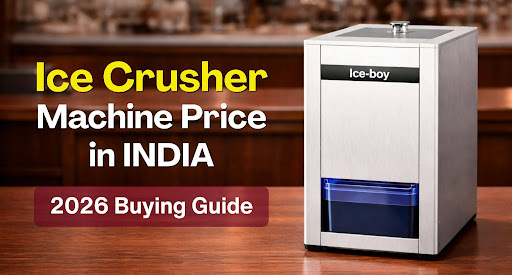
- Simply put, an ice crusher breaks solid ice cubes into smaller pieces.
- Honestly, ice crusher machine prices in India vary more than most buyers expect.
- Two machines that look nearly identical on a product listing can be priced ₹30,000 apart.
- This is the biggest factor. Entry-level machines run on modest 300W motors – fine for a juice stall doing 30 glasses a day. But a café.
- Capacity is measured in kg per hour.
If you have been running a café or bar for any length of time, you already know that crushed ice is not optional, it is part of the product. A cold coffee without proper crushed ice looks wrong. A cocktail without it tastes wrong. And yet, when most F&B business owners sit down to buy an ice crusher machine, they end up confused by the price range, unsure of which type suits them, and often tempted by something cheaper than what they actually need.
This guide cuts through that. We cover ice crusher machine prices in India across every category – from basic manual crushers to full commercial units, explain what drives the cost difference, and give you a clear framework for choosing the right machine for your business.
What Is an Ice Crusher Machine?
Simply put, an ice crusher breaks solid ice cubes into smaller pieces. But depending on the blade design and motor speed, that can mean anything from coarsely cracked chunks to fine, powdery snow-like ice. And that difference matters more than most café and bar owners realise.
Think about it. The crushed ice going into a mojito at a cocktail bar needs to be fine and consistent. The ice served alongside a fresh lime soda at a juice counter? A little coarser is fine. Getting the wrong texture – because your machine can only do one thing affects how the drink looks, how it tastes, and how quickly it dilutes.
In a commercial kitchen, ice crushers show up in more places than you might expect:
- Cocktails and mocktails that need textured, fine-crushed ice
- Cold brew coffees, frappes, and iced lattes in cafés
- Smoothies and fresh-blended fruit drinks
- Gola, granita, and snow-cone style desserts
- Buffet displays and food preservation trays
A good machine runs quietly in the background, doing its job reliably. A bad one?
You will know usually in the middle of a Saturday night rush.
Ice Crusher Machine Price in India
Honestly, ice crusher machine prices in India vary more than most buyers expect. A basic hand-crank model can cost under ₹2,000. A serious commercial unit for a hotel or large bar can push past ₹1.5 lakh. Here is a clear breakdown so you know exactly where your budget fits:
| Machine Type | Capacity | Price Range (INR) | Best For |
|---|---|---|---|
| Manual Ice Crusher | 5–15 kg/hr | ₹1,500 – ₹6,000 | Home use, small stalls, low volume |
| Entry-Level Electric | 20–50 kg/hr | ₹6,000 – ₹20,000 | Small cafés, juice counters |
| Mid-Range Electric (Commercial) | 50–80 kg/hr | ₹20,000 – ₹55,000 | Cafés, bars, restaurants |
| High-Capacity Commercial | 80–150+ kg/hr | ₹55,000 – ₹1,50,000+ | Hotels, large bars, catering |
| Industrial Ice Crusher | 500 kg/hr+ | ₹2,00,000+ | Ice factories, large-scale food industry |
Note: Prices are indicative and may vary by brand, seller, and region. Always check directly with manufacturers for current pricing.
For most cafés, bars, and mid-sized restaurants, the ₹20,000 to ₹55,000 range is the practical sweet spot. You get a proper commercial motor, stainless steel build, and the kind of daily reliability that cheaper machines simply cannot offer. Going below that for a commercial setup is a false economy- more on that in the mistakes section.
Related Read: Ice Cube Machine Price in India (2026)
Factors That Affect Ice Crushing Machine Price
Two machines that look nearly identical on a product listing can be priced ₹30,000 apart. Here is what actually drives the cost difference:
1. Motor Power
This is the biggest factor. Entry-level machines run on modest 300W motors – fine for a juice stall doing 30 glasses a day. But a café handling 200+ cold drinks daily needs something in the 750W range, and a full-service bar or hotel kitchen may need 1000W or higher. More power means the motor doesn’t strain or overheat during back-to-back crushing cycles, which directly affects machine lifespan.
2. Crushing Capacity
Capacity is measured in kg per hour. A small café might get by with 50 kg/hr. A cocktail bar on a weekend night could burn through 80 – 100 kg of ice without breaking a sweat. Always calculate what you genuinely need per shift then add a 20 – 25% buffer for growth and peak days. Buying a machine that is just barely enough today means replacing it sooner than you planned.
3. Build Quality and Material
Stainless steel costs more upfront. But in a commercial environment, anything less is a liability. Plastic frames crack under constant vibration. Aluminium bodies corrode in humid kitchen conditions. A double-layer SS body with welded blades handles the punishment of daily commercial use without giving in. It also meets the hygiene standards expected in food service environments.
4. Motor Speed (RPM)
Higher RPM means faster, more uniform crushing. For a cocktail bar where texture consistency matters for every single drink, a high-RPM machine is worth the extra cost. For a juice counter where speed is the bigger concern, RPM paired with motor wattage is what you want to focus on.
5. Commercial vs Domestic Usage
This distinction is where buyers most often get burned. Domestic machines are built for occasional use, think Sunday brunch at home, not 300 covers a day. The motors are lighter, the blades thinner, and the duty cycle far shorter. Run a domestic machine commercially and you will be replacing it within a few months. Commercial machines cost more because they are genuinely built differently and that price gap is worth every rupee.
Types of Ice Crusher Machines
Manual Ice Crushers
Manual ice crushers are hand-cranked. You load the ice, turn the handle, and crushed ice comes out the other side. Priced between ₹1,500 and ₹6,000, they are easy to clean, need no electricity, and work fine for low-demand situations like home parties or small roadside stalls. But the speed and consistency they offer simply do not hold up in a commercial setting. If you are running even a small café, a manual machine will slow you down.
Electric Ice Crushers
Electric crushers do the work for you, and do it much faster. Entry-level electric models in the ₹6,000 – ₹20,000 range work for juice counters or home setups where demand is light. The mid-range commercial electric segment, ₹20,000 to ₹55,000 is where most cafés and bars should be looking. These machines come with proper motors (300W – 750W), double stainless steel blades, auto-stop protection, and the kind of consistent output that makes your beverage menu dependable.
Commercial Ice Crusher Machines
Commercial machines are in a different league entirely. Starting at ₹55,000 and going well beyond ₹1.5 lakh, these are built for kitchens where the machine runs for hours every single day. Heavy-duty motors, thick welded blades, adjustable texture settings, and SS chassis are standard. Ice Boy India’s commercial line, for example, features 2.5mm welded blades mounted on 18mm rods, auto-stop timers, and lifelong blade-sharpness warranties designed for the kind of use that would destroy a cheaper machine in weeks.
| Feature | Manual | Electric (Domestic) | Commercial Electric |
|---|---|---|---|
| Power Source | Hand-operated | Electricity (300W) | Electricity (300–1500W+) |
| Crushing Speed | Slow | Moderate | High-speed |
| Capacity | 5–15 kg/hr | 20–50 kg/hr | 50–150+ kg/hr |
| Durability | Moderate | Moderate | High (SS body) |
| Ideal For | Home / events | Small cafés | Bars, hotels, restaurants |
| Price Range | ₹1,500–₹6,000 | ₹6,000–₹20,000 | ₹20,000–₹1,50,000+ |
| Maintenance | Very easy | Easy | Easy (slide-out design) |
Ice Crusher Machine for Cafés, Bars & Restaurants
The right machine for your business depends heavily on what you serve and how much of it. Here is a practical look at what different food service businesses actually need:
Cafés & Coffee Shops: Cold brew, iced lattes, frappes, and summer coolers all depend on crushed ice. Counter space is almost always limited, so a compact machine that fits without eating your workspace matters. A mid-range electric crusher with 50-80 kg/hr capacity handles a busy café shift without becoming a noise nuisance or taking over the counter.
Cocktail Bars & Lounges: Bars are unforgiving about consistency. Every mojito, margarita, and whisky smash needs the same ice quality glass after glass, hour after hour. That demands a commercial-grade machine with high RPM, fine crushing output, and blades that stay sharp through a full weekend of service. Cutting corners here shows up in the drink.
Restaurants & QSRs: High table turnover drives high ice demand ,often at the worst possible time, like the middle of a lunch rush. A machine with 80-120 kg/hr capacity and a motor built for continuous operation takes ice supply off your list of problems. Stainless steel body is non-negotiable for FSSAI hygiene compliance in any licensed restaurant kitchen.
Hotels & Banquet Halls: Hotels are running multiple outlets simultaneously coffee shop, restaurant, bar, room service, banquet. High-capacity commercial crushers in the ₹55,000-₹1,50,000 bracket are the right fit, with motors capable of sustaining multi-shift operation without servicing downtime.
Catering Businesses: For caterers, the machine needs to be reliable on-site as much as in a kitchen. Compact build, easy cleaning, and a motor that does not need babysitting during a 500-person event are the priorities. Mid-range commercial models with quick-access blade assemblies are popular in this segment for good reason.
How to Choose the Right Ice Crusher Machine
There is no single right answer; it depends on your operation. But these four questions will get you most of the way there:
How much ice do you actually need per shift? Do not guess. Look at your busiest day, count the cold beverages served, and estimate ice per drink. A café doing 150 cold drinks needs roughly 20–30 kg of crushed ice per shift. A cocktail bar on a Friday night can hit 80 kg easily. Buy for your peak, not your average and add a buffer for growth.
What texture does your menu need? Cocktails need fine, consistent ice. Fresh juices and coolers can handle a coarser crush. If your menu covers both, look for a machine with adjustable blade settings. It saves you from running two separate machines.
How much counter space can you actually give up? Measure before you buy. A machine that does not fit your workstation creates workflow problems that are hard to fix after the fact. Most mid-range commercial crushers are designed with compact footprints specifically for café and bar counters but dimensions vary by brand.
What is your real budget? Set it honestly. For a café or bar, ₹20,000-₹55,000 is the realistic range for a machine that will actually last. Anything below that is a domestic or near-domestic machine, and it will not survive commercial daily use. Think of this as a 3–5 year investment, not a one-time expense.
Common Buying Mistakes to Avoid
- Going for the cheapest option available: It is tempting, especially when setting up a new outlet. But a ₹4,000 ice crusher in a café environment will fail within months. The replacement cost plus the downtime and disruption, almost always exceeds what you would have spent on a proper machine from day one.
- Choosing capacity too close to your current need: Businesses grow, menus expand, and peak periods get busier. A machine that is just enough today becomes a bottleneck by next summer. Size up by at least 20–25% when buying for commercial use.
- Ignoring the body material: Plastic and lightweight aluminium frames might look fine in a photo, but they vibrate, crack, and corrode in a professional kitchen environment. Stainless steel is not a premium – it is a minimum requirement for commercial use.
- Buying a domestic machine for a commercial setting: This deserves its own mention because it is the most common costly mistake. Domestic motors are not built for continuous operation. They overheat, the blades dull quickly, and the warranty usually does not cover commercial use. You end up spending more in repairs than you saved upfront.
- Not checking after-sales support before purchasing: A machine is only as good as the support behind it. Before you buy, ask about warranty terms, blade replacement policies, and local service availability. A brand with 30+ years in the market and a dedicated service network is worth the slightly higher price for the peace of mind alone.
People Also Ask
What is the price of an ice crusher machine in India?
It ranges from around ₹1,500 for a basic manual unit to over ₹2,00,000 for high-capacity industrial models. For cafés and bars, a reliable commercial electric machine typically falls in the ₹20,000 to ₹55,000 range.
Which ice crusher machine is best for commercial use?
A commercial-grade electric machine with a stainless steel body, a 300W – 750W motor, and at least 50 – 80 kg/hr crushing capacity. Look for auto-stop protection and a blade warranty. Machines like those from Ice Boy India are purpose-built for this use case.
What is the difference between manual and electric ice crushers?
Manual machines are hand-cranked and work for light, occasional use. Electric machines use a motor for faster, more consistent output and are the only practical option for any commercial food service setting.
Can ice crusher machines be used in cafés?
Yes and they should be. A mid-range commercial electric crusher fits easily into a café workstation and handles the daily demand for iced lattes, cold brews, and frappes without slowing down service.
How do I choose the right ice crusher machine?
Start with your daily ice volume, then match it to motor capacity and machine size. For commercial use, always choose stainless steel construction and a proper commercial motor. Avoid domestic machines that are not built for the job.
Final Thoughts
Most café and bar owners think about their coffee machine, their blender, their POS system. The ice crusher? It tends to be an afterthought until it breaks down on a busy Saturday and the entire cold drinks menu grinds to a halt.
The right machine does not draw attention to itself. It just works every service, every shift, every season. That kind of reliability is exactly what Ice Boy India has built their commercial range around: stainless steel construction, welded blades with lifelong sharpness warranties, auto-stop safety, and over 33 years of real-world use across cafés, bars, restaurants, and hotels across India.
If you are serious about your cold beverage menu, be serious about your ice. The investment is smaller than you think, and the difference it makes in consistency, speed, and customer experience is bigger than most people expect.
| Ready to Invest in a Commercial Ice Crusher? Get in touch with Ice Boy India today for a personalized quote based on your business size, usage, and budget. Our experts will help you choose the right machine. +91-7838387422 | sales@iceboy.in | iceboyindia.com Contact Us / Get a Quote Today |