
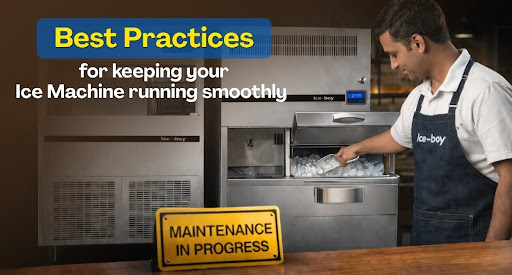
- A commercial ice machine runs every single day.
- In a busy hotel, it starts before breakfast service and does not stop until the last drink is poured.
- In a cafe, it powers every cold beverage that goes out the counter.
- In a seafood business, it is the difference between fresh stock and spoiled goods.
- Most business owners invest in a quality machine, install it, and then largely ignore it until something goes wrong.
A commercial ice machine runs every single day. In a busy hotel, it starts before breakfast service and does not stop until the last drink is poured. In a cafe, it powers every cold beverage that goes out the counter. In a seafood business, it is the difference between fresh stock and spoiled goods.
Most business owners invest in a quality machine, install it, and then largely ignore it until something goes wrong. That is the expensive way to do things. A machine that gets consistent care performs better, lasts longer, produces cleaner ice, and costs less to run.
This guide covers everything you need to maintain your ice machine properly — organized by frequency so it fits into your actual operations, not just a checklist that sits in a drawer.
Why Regular Ice Machine Maintenance Is Important
Prevent Costly Breakdowns
Scale buildup on the evaporator forces the compressor to work harder. A dirty condenser raises operating temperatures. A clogged water filter reduces flow, stressing the pump. None of these cause immediate failure — they create slow, compounding damage that ends in an expensive repair bill or a replacement machine.
Protect Ice Quality and Hygiene
Ice is a food product. When the storage bin, water lines, and internal surfaces are not cleaned regularly, you get bacterial growth, slime, and mold. In commercial kitchens and hospitality environments, contaminated ice is a liability you cannot afford.
Reduce Energy Consumption
A well-maintained machine runs efficient cooling cycles and consumes electricity as intended. When scale clogs the evaporator or dust blocks condenser airflow, the refrigeration system has to compensate. Studies show that regular maintenance can reduce energy consumption by 15-20%, which adds up significantly when a machine runs 12-24 hours a day.
Extend Machine Lifespan
Proper maintenance can extend the working life of your machine by 30-40% compared to neglected units. That means several additional years of reliable service from equipment you have already paid for.
Daily Maintenance Tips
These checks take under five minutes. Make them part of opening or closing routine for whoever manages the machine.
Check the Water Supply
Confirm water is flowing to the machine and that pressure is adequate. Low pressure is one of the most common causes of reduced ice output. If the machine is producing less ice than usual, check water supply before calling for service.
Clean Exterior Surfaces
Wipe down the exterior with a damp, lint-free cloth. In kitchen environments, grease and dust accumulate quickly. Blocked ventilation grilles on the sides or rear restrict airflow to the condenser — keep them clear.
Monitor Ice Quality
Look at the ice. Is it clear? Consistent in size and shape? Slow-melting? Changes in clarity, shape, or taste are early signals that something needs attention inside the machine. Good ice is transparent and firm. Cloudy, soft, or oddly-shaped ice tells you something has changed.
Check Ice Bin Level
If the bin is overfull and ice is piling up at the dispenser, the bin sensor may not be working correctly or ventilation is limited. Overfilled bins restrict airflow and cause ice to clump.
| Ice-boy Tip:Ice-boy machines with touchscreen displays show real-time alerts for bin full status, low water, and cycle timing — making daily monitoring faster and more accurate. |
Weekly Cleaning Checklist
Once a week, your team should complete these tasks. It takes 20-30 minutes and prevents the bulk of hygiene and performance issues.
Clean the Ice Storage Bin
Turn off the machine. Remove all remaining ice. Wipe down the interior of the storage bin using a food-safe sanitizer and a lint-free microfiber cloth. Pay attention to corners and drainage areas where moisture collects. Dry thoroughly before restarting.
Inspect the Water Filter
Check whether the filter is due for replacement. If you are in a city with high TDS water (above 300 ppm — common in Delhi, Jaipur, Hyderabad, and many other Indian cities), your filter works harder and needs replacement more often.
Check for Unusual Noise or Vibration
Listen to the machine during a cycle. A healthy machine has a consistent, low hum. Rattling, grinding, or irregular sounds typically indicate a loose component, a struggling compressor, or scale buildup affecting moving parts.
Monthly Deep Cleaning Guide
Monthly deep cleaning is where most of the real protection happens, especially in Indian operating conditions.
Descaling: Critical in India’s Hard Water Conditions
India’s water supply varies dramatically by region, but a large part of the country deals with hard water — water with a high concentration of dissolved minerals like calcium and magnesium. When this water is used repeatedly, those minerals deposit on the evaporator coils, water lines, and internal surfaces as white or chalky scale.
Scale acts as an insulator on heat transfer surfaces, forcing the refrigeration system to work much harder to produce the same amount of ice. Left unchecked, it causes significant efficiency losses, increases wear on the compressor, and eventually leads to failure.
Monthly descaling with a manufacturer-recommended descaling solution or food-grade citric acid removes these deposits before they harden. In areas with very high TDS, consider descaling every two to three weeks.
| Important:Never use vinegar as a substitute for a proper descaling agent in commercial machines. It is not strong enough for heavy scale and can damage seals over time. Use a product specifically rated for ice machine use. |
Cleaning Internal Components
Monthly cleaning should cover the evaporator, water distribution lines, water pump area, and any accessible internal surfaces. For Ice-boy machines with the patented slide-out design, the entire splasher assembly can be pulled out for easy, thorough cleaning without dismantling the unit.
Sanitizing Water Lines
After descaling, flush all water lines with a food-safe sanitizer solution. This eliminates any bacterial buildup in the lines before the machine returns to ice production. Run a full cycle of ice and discard the first batch after sanitizing.
How to Clean an Ice Machine (Step-by-Step)
For a full cleaning procedure, follow these steps. Refer to your specific machine manual for model-specific instructions.
1. Turn off the machine. Switch to cleaning mode if available, or turn off power completely. Let the machine cycle out remaining ice production.
2. Empty the ice bin. Remove all ice from the storage bin. Never clean around active ice — cleaning chemicals should not contaminate ice meant for consumption.
3. Prepare your cleaning solution. Mix the manufacturer-approved ice machine cleaner or descaling solution per the instructions on the product. Wear gloves.
4. Clean internal parts. Apply the cleaning solution to the evaporator, water trough, distribution tubes, and any accessible internal surfaces. Use a soft brush for a stubborn scale. Do not use abrasive pads.
5. Sanitize all surfaces. After cleaning, apply a food-safe sanitizer to the storage bin interior and all surfaces that contact ice or water. Wipe with a lint-free cloth and allow to dry.
6. Flush and restart. Run fresh water through the system. Restart the machine and run one full ice production cycle. Discard this first batch of ice before returning to normal service.
7. Inspect and log. Check ice quality on restart — clarity, shape, and quantity should be back to normal. Log the cleaning date and note anything unusual.
Common Ice Machine Problems and How to Fix Them
| Problem | Likely Cause | First Fix |
| Ice melting too fast | Overfull bin, poor ventilation, high ambient temperature | Check ventilation clearances. Ensure bin sensor works. Move away from heat sources. |
| Low ice production | Scale on evaporator, clogged filter, low water pressure | Descale the machine. Replace water filter. Check water pressure at supply line. |
| Bad taste or odor | Dirty storage bin, contaminated water, expired filter | Deep clean and sanitize bin and water lines. Replace water filter. Check water source. |
| Cloudy ice | Mineral buildup, poor filtration, high TDS water | Descale evaporator. Replace or upgrade water filter. Test incoming water TDS. |
| Machine not starting | Power issue, bin full sensor triggered, water disconnected | Check power connection. Confirm water is flowing. Empty bin and restart. Check error codes. |
| Water leakage | Loose fittings, cracked drain line, blocked drain | Inspect all connections and fittings. Clear drain lines. Call service if the source is internal. |
How Water Quality Affects Your Ice Machine
Hard Water and Scaling
India’s Bureau of Indian Standards classifies water above 300 mg/L as hard. Many cities — including Delhi, Jaipur, Ahmedabad, Nagpur, and large parts of Rajasthan and Haryana — regularly exceed this. In hard water conditions, calcium carbonate deposits form on evaporator coils and water distribution channels every few weeks.
Why Your Water Filter Matters
A good water filter removes suspended solids, chlorine, and reduces dissolved minerals before water enters the ice machine. It protects the evaporator, improves ice clarity, and eliminates taste issues caused by chlorine or contaminants. Replace filters every 6 months under normal use — every 3 months in high-TDS areas.
Impact on Ice Clarity
Crystal-clear ice is not just aesthetic. It indicates that the freezing process expelled dissolved gases and minerals correctly — which only happens when the evaporator is clean and the water supply is properly filtered. Cloudy ice means something is interfering with that process.
| Why Ice-boy machines handle Indian water better:Ice-boy machines are engineered specifically for Indian water conditions, with materials and design choices that tolerate TDS variations common across the country. Imported machines are often calibrated for softer European or American water and may degrade faster in Indian conditions. |
Signs Your Ice Machine Needs Servicing
Reduced Ice Output Without an Obvious Cause
If you have descaled, replaced the filter, and confirmed water pressure is fine — but the machine is still producing less ice than it should — there may be a refrigerant issue or a component working below capacity. This needs professional assessment.
Consistently Cloudy Ice Despite Cleaning
If ice remains cloudy after a proper descaling and filter replacement, the issue may lie in the evaporator coating, freezing cycle timing, or water distribution system. A technician can diagnose where the freezing process is going wrong.
Unusual or Persistent Sounds
Grinding, rattling, or high-pitched sounds that continue after cleaning could indicate a failing compressor, worn bearing, or loose mechanical component. Do not wait — mechanical damage compounds quickly in machines that run continuously.
Water Leaking from Inside the Machine
Active water leaking from the machine’s base, rear, or internal panels is not normal. This usually means a cracked water line, a failing seal, or a blocked drain that needs professional attention.
Pro Tips to Increase Ice Machine Lifespan
Use Proper Filters Matched to Your Water
Do not use generic filters. Use filters rated for your local TDS level. Some locations in India benefit from a two-stage filtration setup — a sediment pre-filter followed by a scale-reduction cartridge — before water enters the machine.
Avoid Overloading the Machine
Running a machine at 110% of its rated capacity every day accelerates wear on every component. If your ice demand has grown beyond your current machine’s capacity, consider upgrading to a higher-capacity model rather than pushing the existing one beyond its limits.
Schedule an Annual Maintenance Contract (AMC)
Professional servicing once or twice a year, done by trained technicians with access to genuine parts, is the most reliable way to catch problems before they become expensive. Ice-boy’s AMC plans cover inspection, deep cleaning, calibration, and priority service response across India.
Maintain Proper Ventilation Space
Most commercial ice machines need a minimum of 6 inches of clearance on all sides for proper airflow. Machines installed in tight alcoves or enclosed cabinets run hotter, which stresses the compressor and reduces efficiency.
Keep a Maintenance Log
A simple log noting each cleaning, descaling, filter replacement, and service visit lets you track performance trends over time. If output starts dropping month over month, the log helps diagnose whether it is a cleaning frequency issue or something more serious.
When to Call Professional Service
Electrical Issues
Any problem involving wiring, control boards, or electrical components must be handled by a qualified technician. Ice machines work with both water and electricity — attempting DIY electrical repairs is dangerous and can cause serious damage to the unit.
Refrigerant-Related Problems
If the machine is running but ice production has dropped significantly and descaling has not helped, the refrigeration system may have a refrigerant leak or a failing compressor. Refrigerant handling requires certification and specialized equipment — strictly a job for a trained service engineer.
Major Component Failure
Failing water pumps, condenser fan motors, control boards, and compressors all require certified replacement with genuine parts. Using non-genuine or incompatible parts often causes secondary failures and can void your machine warranty.
| Ice-boy Service Network:Ice-boy’s trained technicians are available across India with 24-48 hour response time. Genuine spare parts are available for all models. Log a service request at iceboyindia.com/service-support or call +91-7838387422. |
Final Thoughts
Maintenance is not glamorous. It is a five-minute check in the morning, a half-hour cleaning session once a week, a monthly descale. None of it feels urgent until the day the machine stops working during a busy service period.
The businesses that get the most out of their ice machines are the ones that build maintenance into the routine the same way they would clean a grill or stock a refrigerator. It is not an extra task — it is part of running the equipment correctly.
A well-maintained ice machine produces better ice, costs less to run, rarely needs emergency repairs, and can serve your business reliably for well over a decade. That is the straightforward math of consistent upkeep.
Frequently Asked Questions
How often should I clean my commercial ice machine?
Clean the ice storage bin weekly. Descale internal components monthly — more often if your water TDS is above 300 ppm. Do a full professional deep clean every 3 to 6 months depending on usage volume.
Why is my ice machine producing less ice than before?
Reduced output is usually caused by scale buildup on the evaporator, a clogged water filter, restricted airflow from a dirty condenser, or low water pressure. Start with descaling and a filter replacement before calling for service.
How do I descale an ice machine in India’s hard water conditions?
Use a manufacturer-approved descaling solution or food-grade citric acid. Run the descaling cycle per your machine’s manual — typically every month in areas with TDS above 300 ppm. Always flush the system with clean water afterward and discard the first batch of ice.
What causes cloudy or bad-tasting ice?
Cloudy ice typically means mineral buildup on the evaporator or poor filtration. Bad taste usually points to a dirty storage bin, contaminated water supply, or an overdue filter. Clean the bin, replace the filter, and if the problem persists, test your incoming water quality.
When should I call a professional for ice machine service?
Call a technician for electrical faults, suspected refrigerant issues, component failures, persistent water leaks, or any significant performance drop that regular cleaning does not resolve. Ice-boy’s pan-India service network offers 24-48 hour response time for all major cities.
How often should I replace the water filter?
Replace water filters every 6 months under normal usage conditions. In areas with high TDS water (above 300 ppm) or in high-volume commercial environments, replace every 3 months. A clogged filter reduces flow, accelerates scale buildup, and affects ice clarity and taste.